Solution
Generative AI offers a significant advantage in reviewing compilation processes. After submitting a compile job, it can read the output and associated log files to quickly determine the result. Instead of manually checking compiler listings and job messages, a developer can prompt generative AI to explain whether the compilation succeeded or failed. In the event of a failure, the AI can explain the error, and suggest the specific lines of code or JCL modifications needed to resolve the issue.
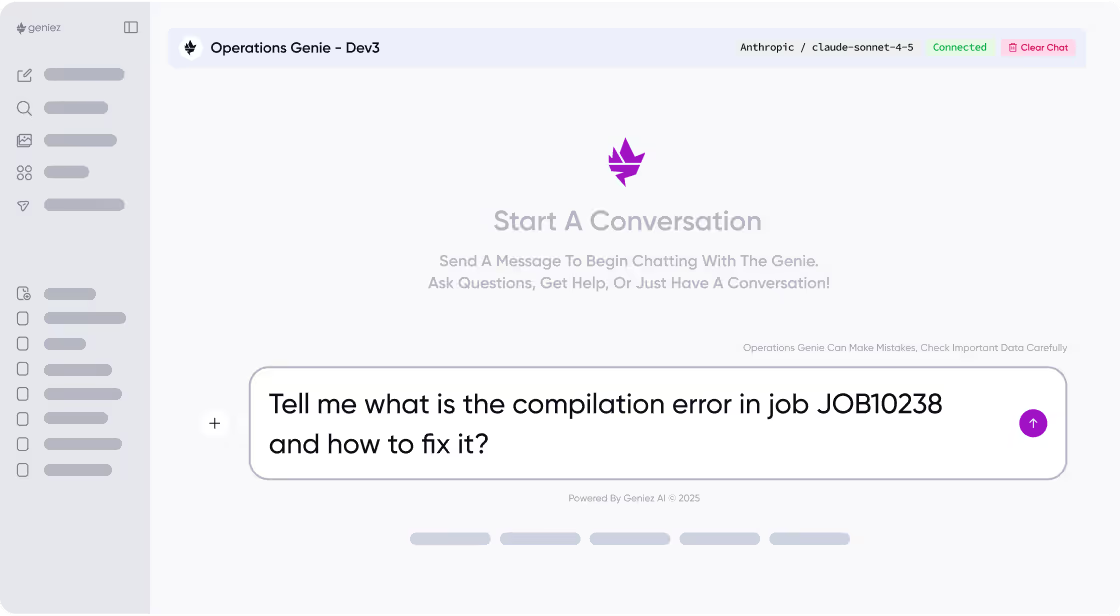
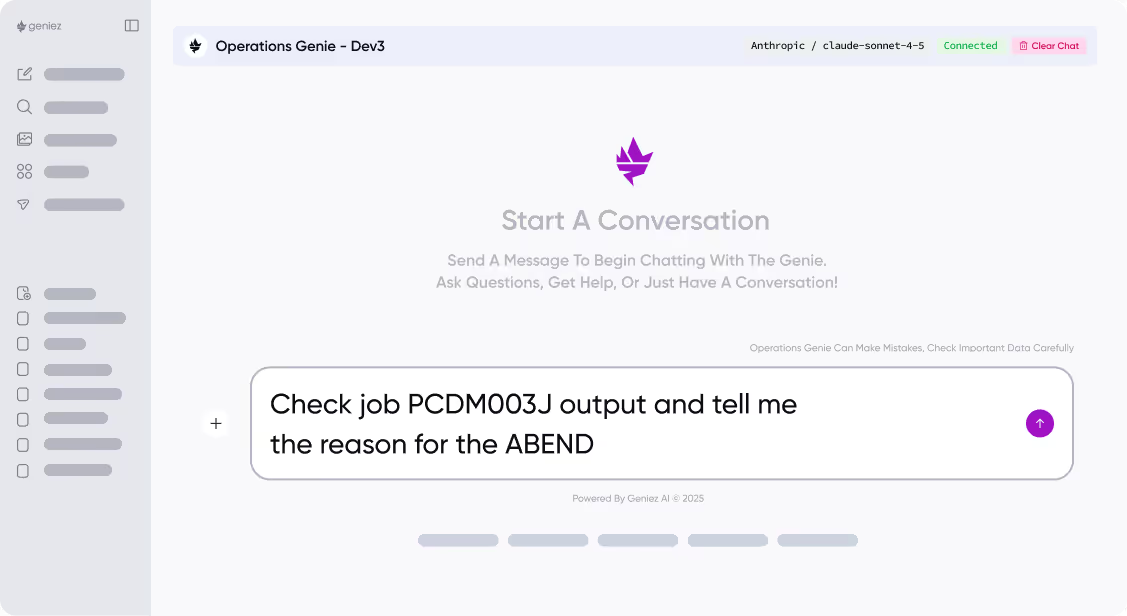
Developers can use generative AI to easily interpret z/OS job output. For a failed job, generative AI can quickly collect the key information from JCL, job messages, and log records to explain why a failure occurred, identify the root cause (e.g., missing dataset, security violation, program error), and suggest specific remediation steps, saving the need to check literature for error messages and code and significantly reducing debugging time.
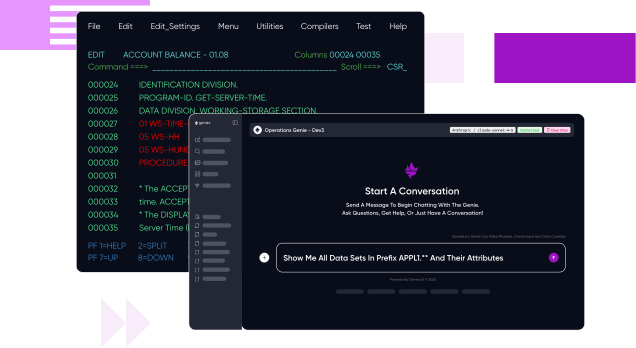
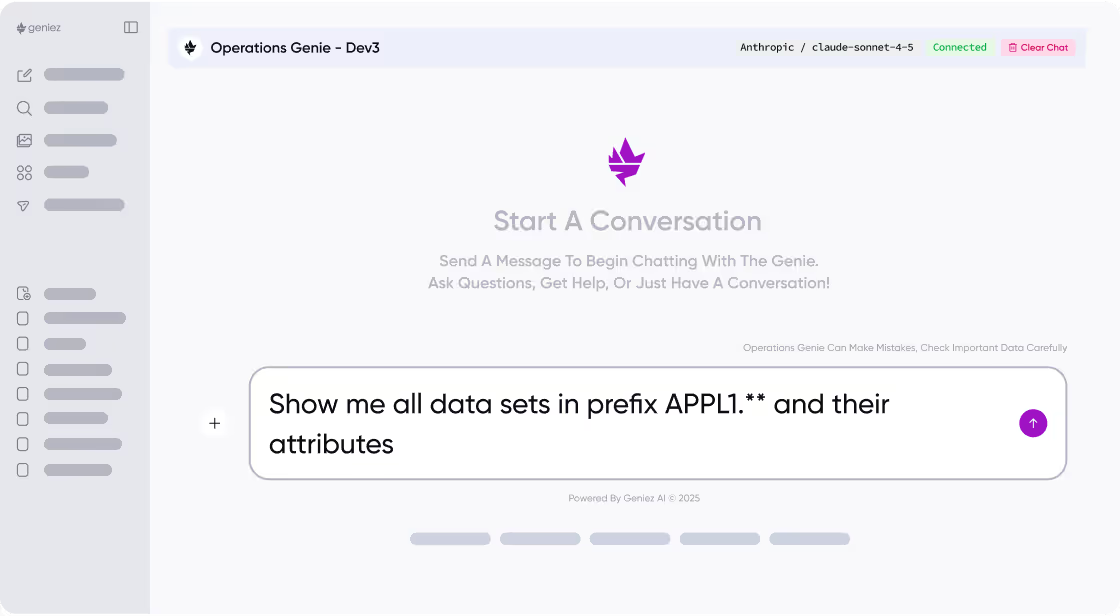
By querying the catalog and VTOC in natural language, generative AI can locate specific data sets and retrieve their attributes such as record format, block size, and organization. This understanding allows the AI to dynamically generate JCL needed to perform tasks such as reading, updating, or allocating new data sets with similar attributes, significantly streamlining development and operations tasks or searching source control data bases, like Endevor for example, for program source members.
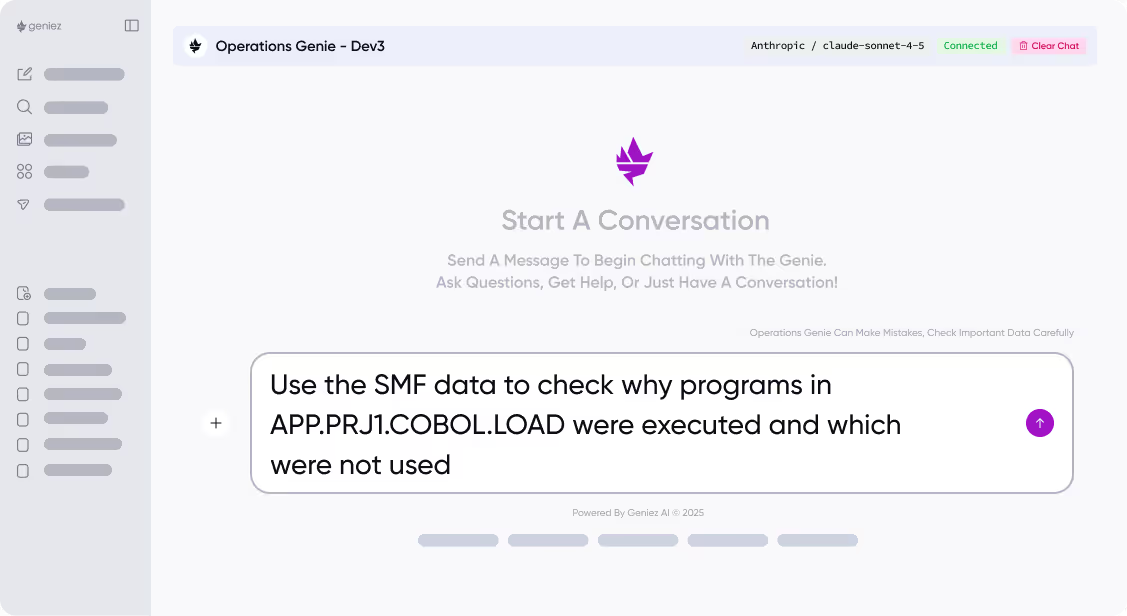
Developers modernizing a legacy application often approach the task by first mapping existing logic and application programs. By connecting generative AI with various mainframe data sources, such as SMFtype 30 records, a developer could ask the AI to check which load modules in a given library have actually run in a certain period of time, quickly generating a report of which programs are used and which are not and easily identifying which programs should be modernized and which are obsolete.